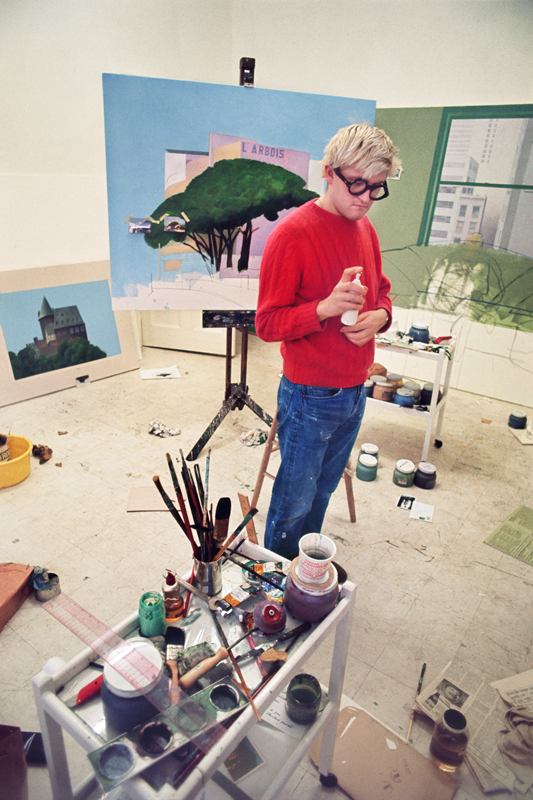
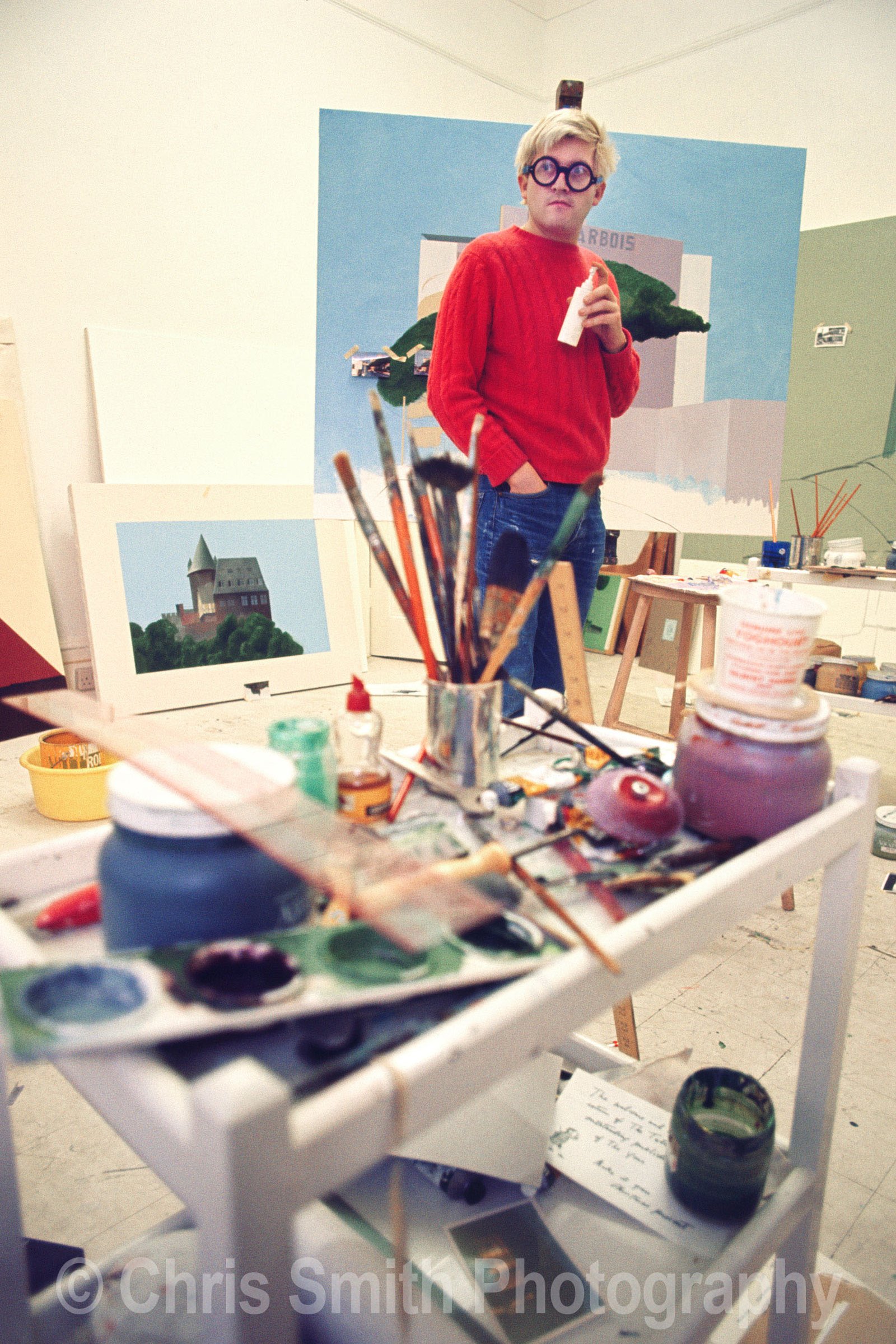
In autumn 2024, news that David Hockney’s L’Arbois, St-Maxime would lead a Sotheby’s auction opened a door back to my own photographic past. A casual chat at my local framer’s shop prompted a simple question: did the transparencies from that 1968 studio session still exist, and if so, where? That question led to a digital treasure hunt spanning Pinterest, the Guardian’s archives and the long-closed files of the Observer picture library.
Working with my son and two dedicated archivists, we finally tracked down the original film. Seeing the images on a lightbox again after decades was a shock: there was Hockney in his Kensington studio, surrounded by paint pots and canvases, working at speed on a painting that would soon travel from easel to auction catalogue. The colour, detail and intimacy of those frames convinced me they deserved a public life beyond the archive, which is how they came to form the David Hockney Gallery you can explore on this site.

The timing could not have been better. As the painting attracted attention at Sotheby’s, the photographs provided a complementary narrative – a visual backstory that connects collectors, fans and new audiences with the moment of creation. Together, the auction and the gallery highlight just how far Hockney’s reputation has travelled, from a busy London studio in 1968 to international salerooms more than half a century later.
For anyone discovering these works now, the gallery offers a chance to stand where I stood: in that high-ceilinged room, watching an artist build a career-defining painting layer by layer. Whether you come to Hockney as a collector, a student of art history or simply a curious visitor, these photographs invite you into that story and preserve a fleeting moment when both an artist and a photographer were quietly shaping their own legacies.
Read the full story of the 1968 studio session | How Hockney blended photography and painting | Explore the David Hockney Gallery