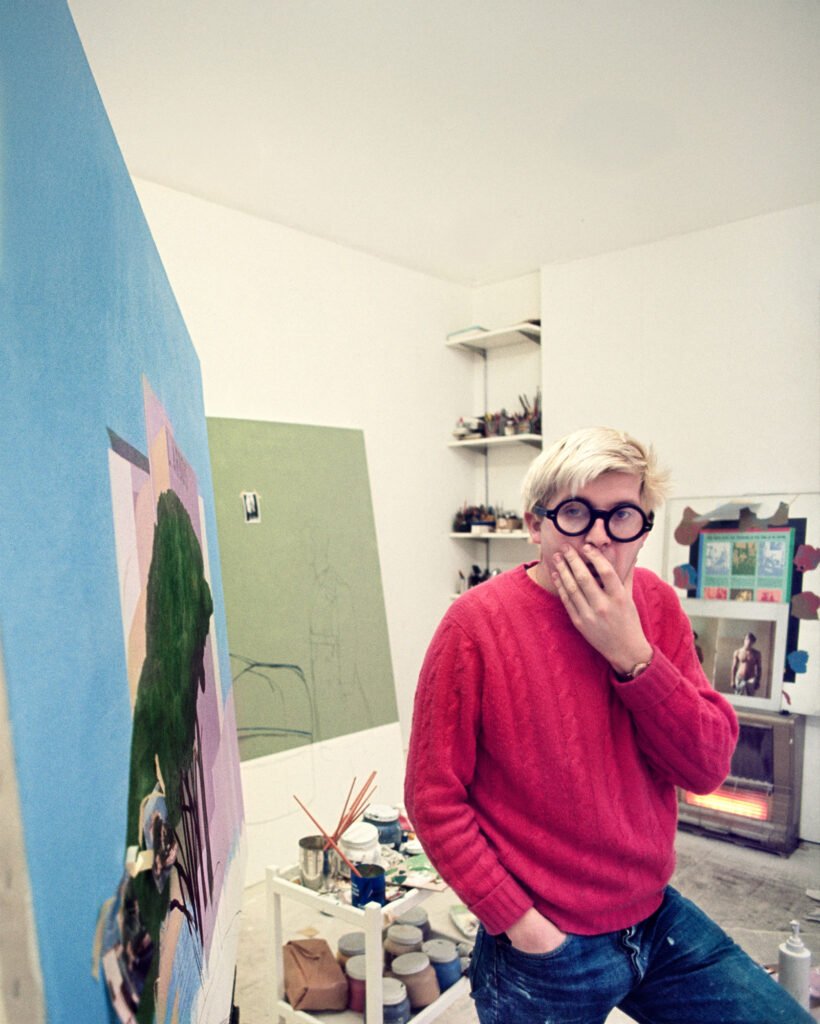
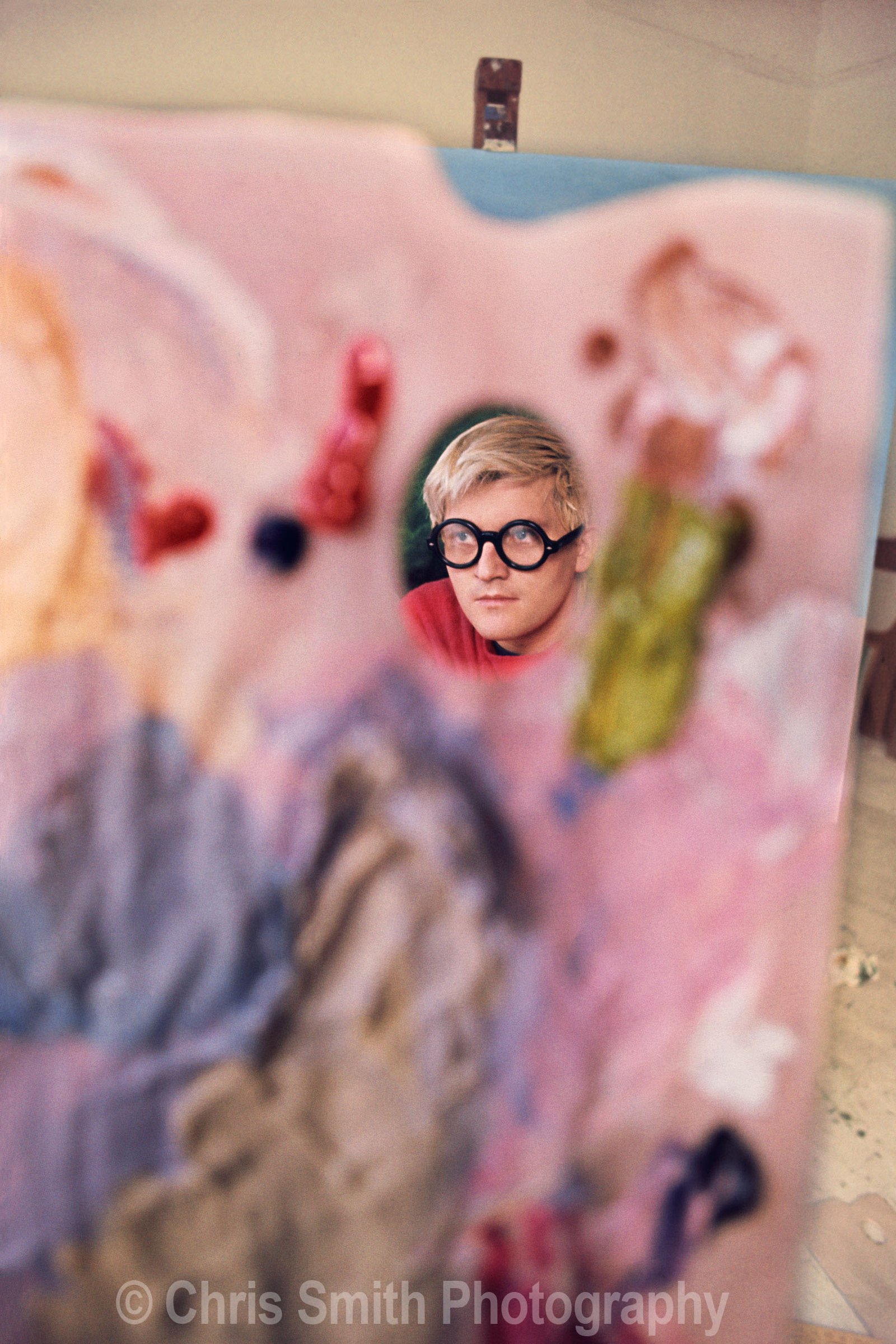
Long before his famous photo joiners made headlines, David Hockney was already experimenting with photography inside his studio. When I photographed him working on L’Arbois, St-Maxime in 1968, I watched him pin photographs directly onto the canvas as visual notes, testing how the camera’s way of seeing could feed back into painting.
The images in our David Hockney Gallery capture these early experiments in detail: reference photos taped to the surface, bold shadows and crisp colours echoing the look of film, and Hockney positioning himself in relation to both canvas and camera. In several frames he stands beside a paint trolley loaded with quick-drying acrylics, tools that allowed him to work fast enough to chase the fleeting Mediterranean light he wanted to recreate. This fusion of photography and painting would later blossom into his renowned collages, but the seeds are visible right here in this Kensington studio.
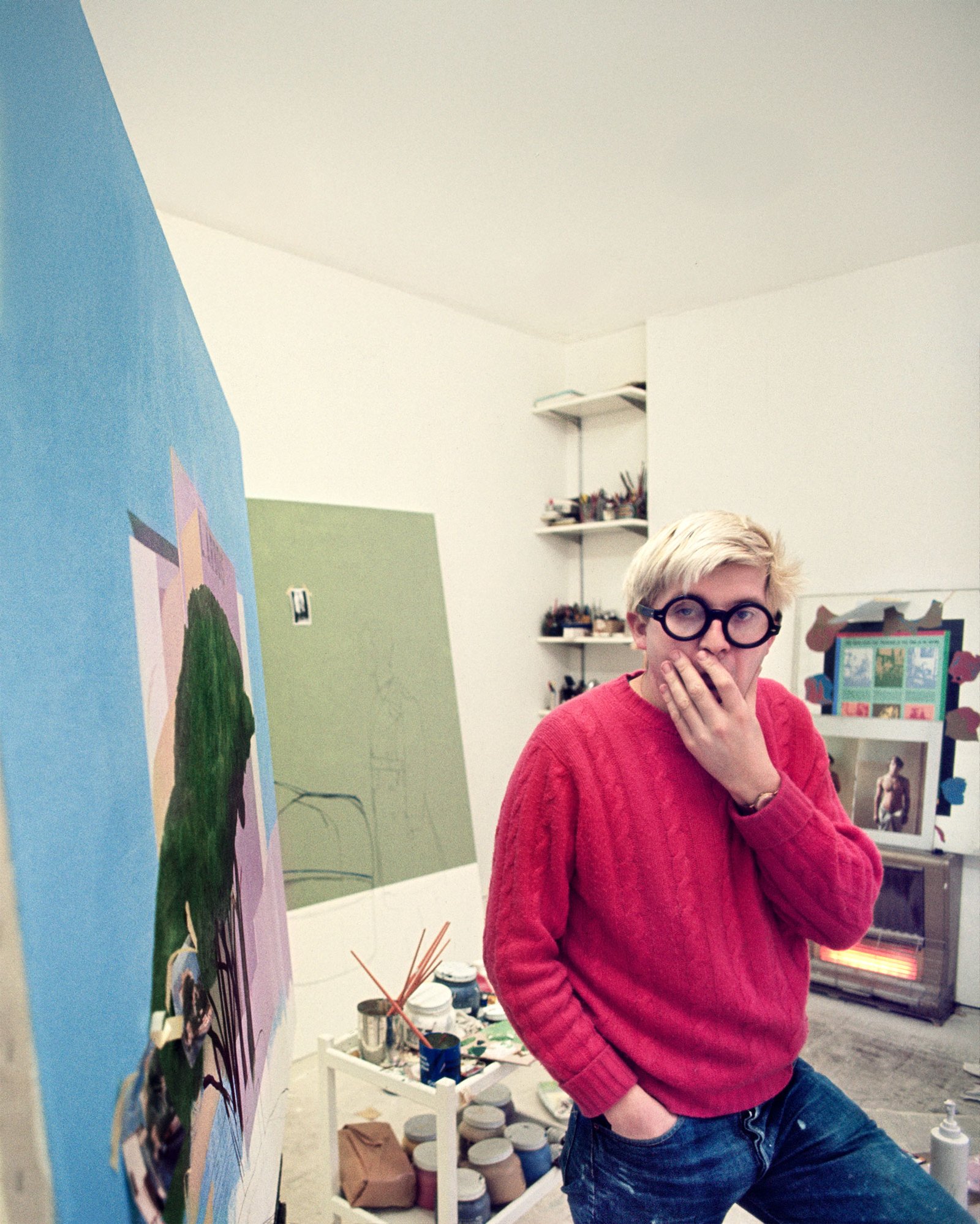
For collectors, historians and fans, these photographs are more than nostalgic snapshots. They offer concrete evidence of how Hockney’s visual thinking developed, how he used every available medium – from magazine covers scattered on the table to pinned photographs and colour tests – to sharpen his vision. By preserving this working environment, the gallery shows Hockney not just as a finished master but as an artist in motion, constantly testing, editing and refining his ideas.
If you would like to explore this side of Hockney further, start with the images of him standing beside L’Arbois, St-Maxime part-way through its creation. They bridge two legacies: the emerging language of Hockney’s art and a photographer’s attempt to capture the electric moment before greatness is fully recognised. Read the full story behind these photographs.